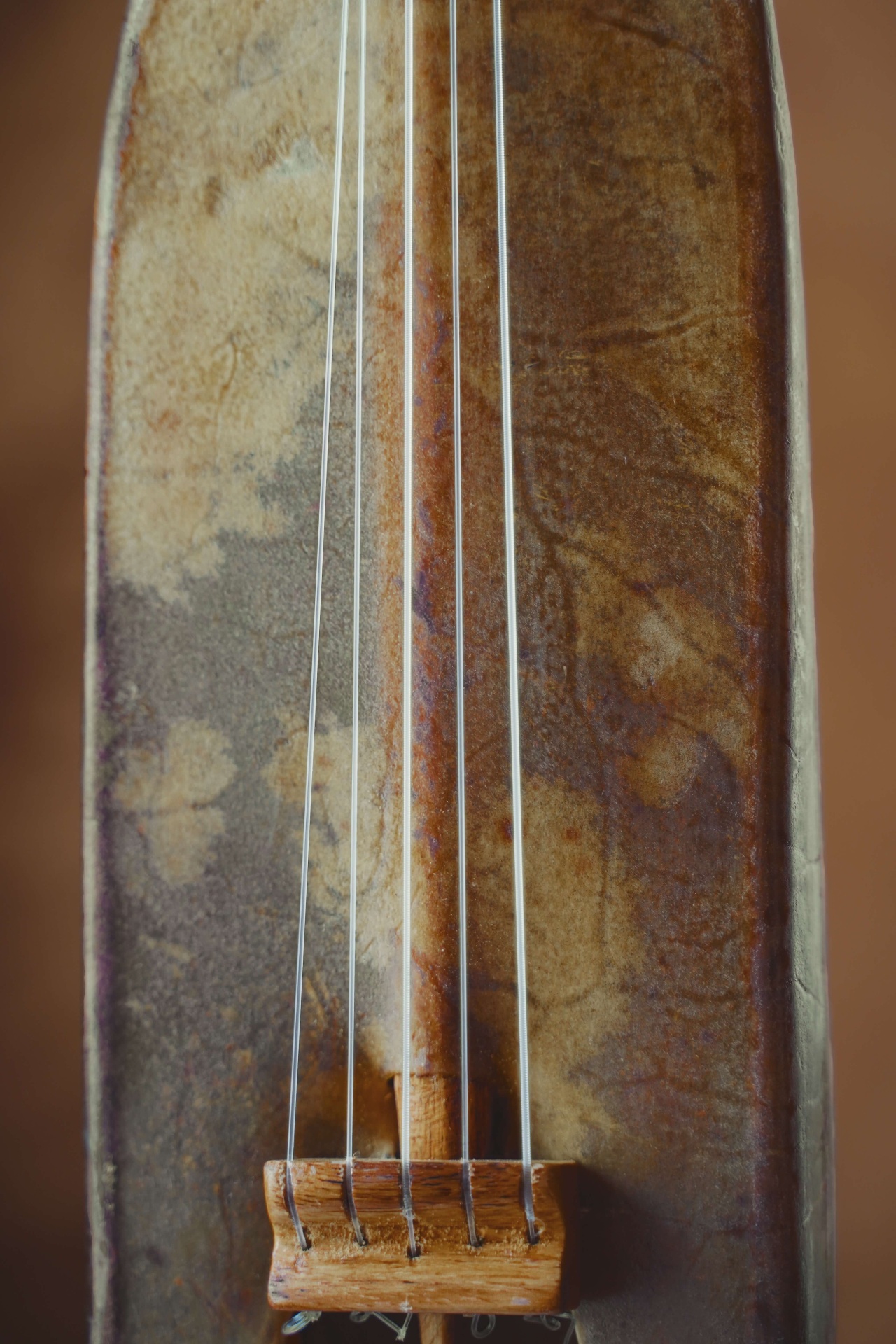
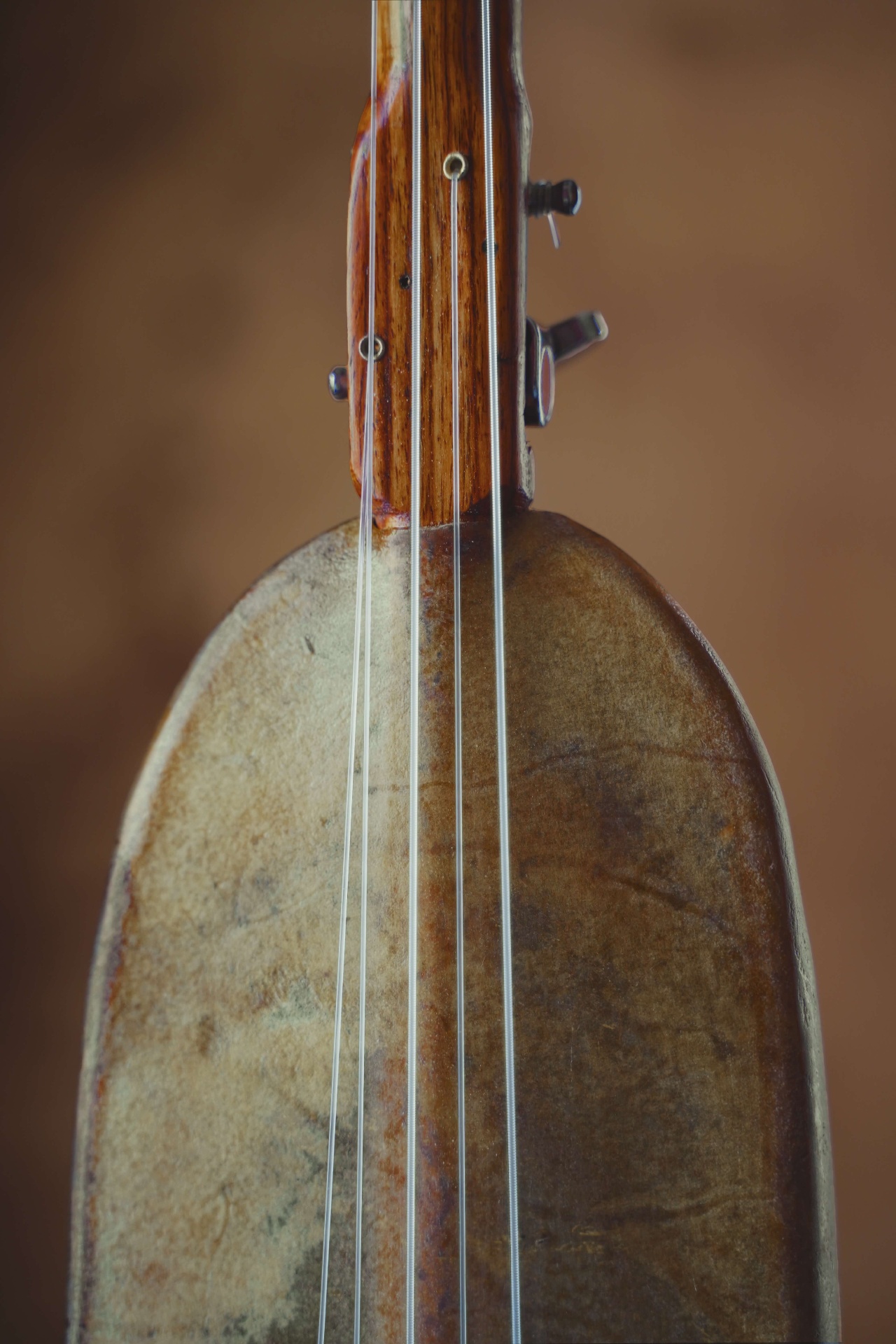
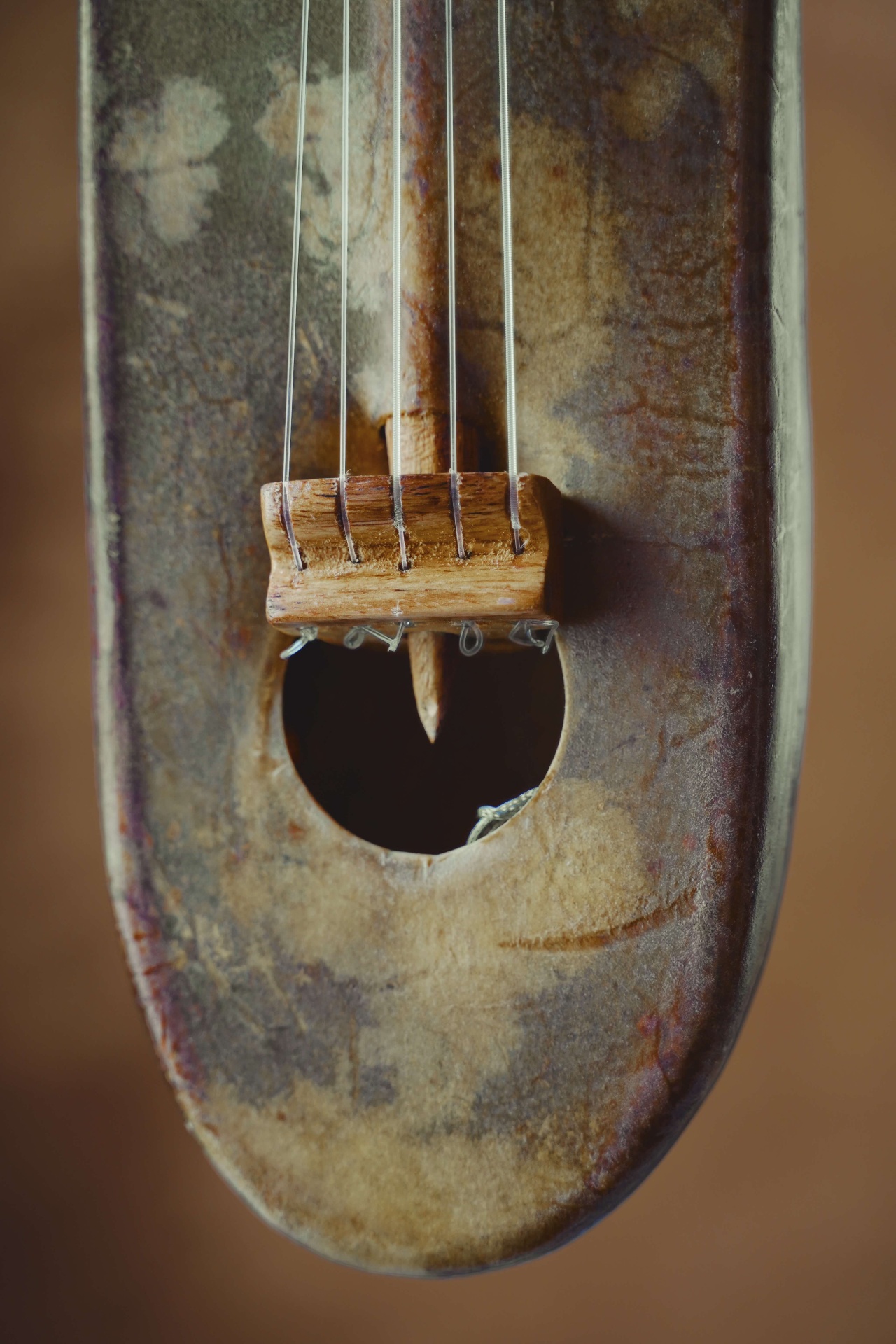
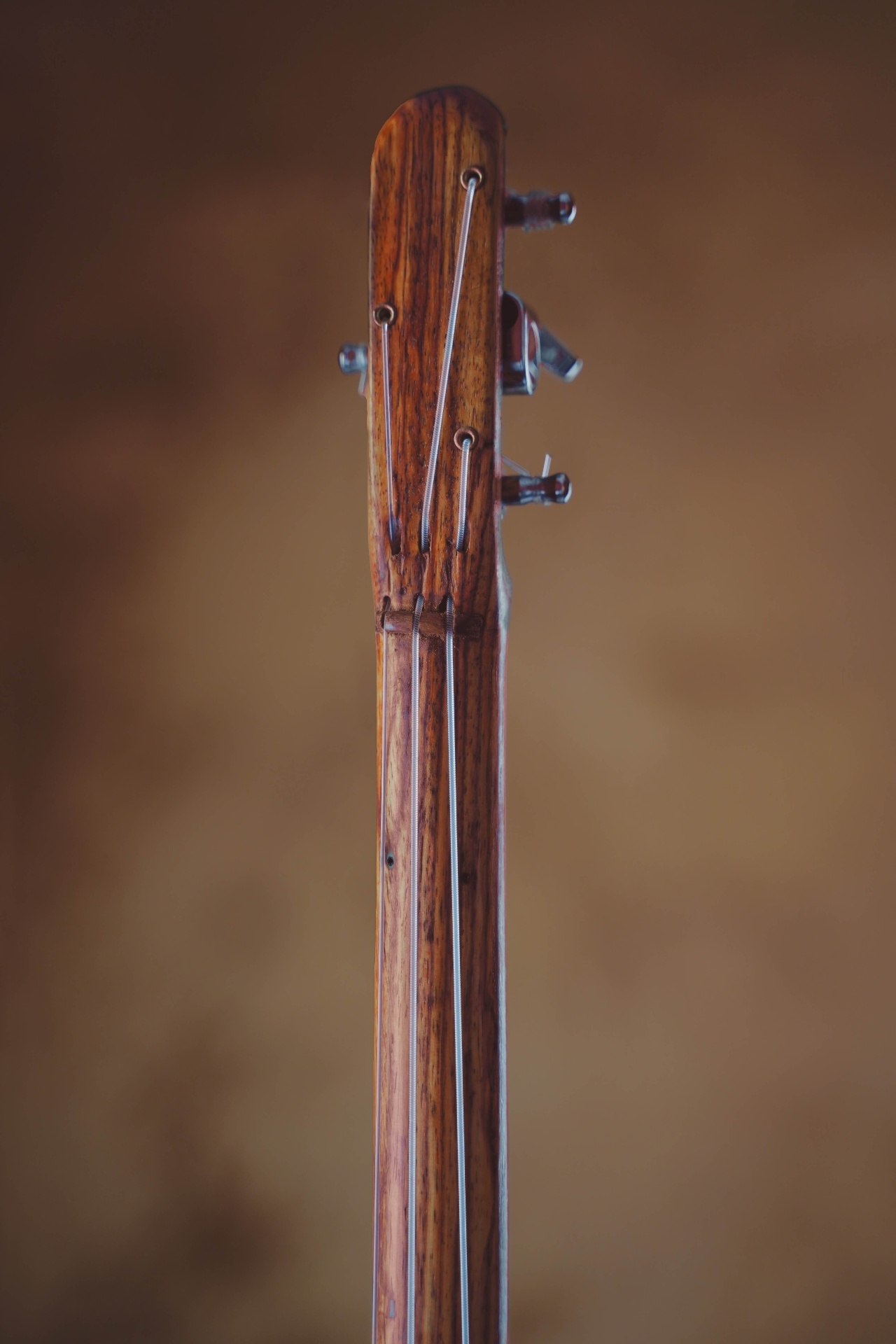
The xalam belongs to one of West Africa’s oldest families of plucked string instruments. Built from a wooden body, covered with stretched animal skin, and fitted with resonating strings, this traditional lute has carried stories, praise, prayer, memory, and rhythm across the region for centuries.
Its sound is direct and human. It can be raw and bluesy, soft and intimate, rhythmic and percussive, or deep and meditative. In the hands of a master player, the xalam does not only accompany the voice. It speaks with it.
A Family of Skin-Covered Lutes
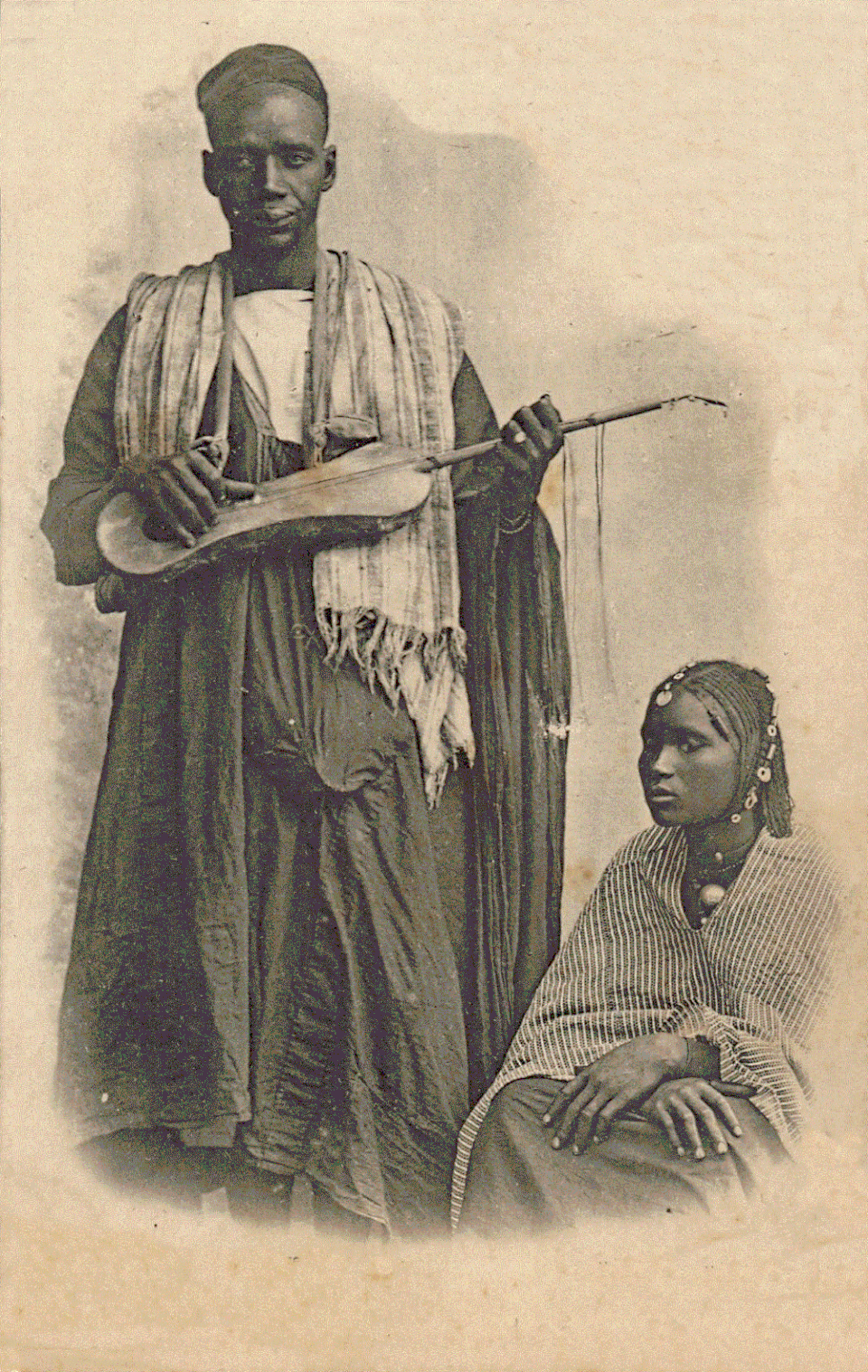
A halamkat (xalam player) holding a khalam — Wikimedia Commons
In Senegal, the instrument is commonly known as the xalam. In Mali, related instruments are often called the ngoni or djeli ngoni. Across West Africa and the Sahel, similar skin-covered lutes appear under different names and designs, including the hoddu, tidinit, gimbri, and sintir.
The shapes, tunings, and playing techniques change from region to region, but these instruments share a deep musical language. They connect melody with rhythm, song with speech, and personal expression with collective memory.
Unlike many modern string instruments, the xalam is not built only for clean notes and fixed tuning. Its beauty is in its living tone: the skin, the bridge, the strings, the wood, and the touch of the player all shape the final voice.
The Griot Tradition
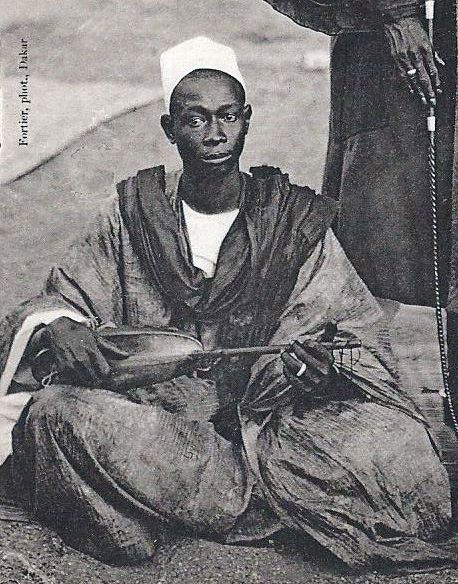
Sénégal — Chef indigène et son griot (AOF) — Wikimedia Commons
The xalam is closely connected to the griot tradition of West Africa. Griots, also known in different regions as jeli, djeli, gewel, or gawlo, are hereditary musicians, storytellers, historians, praise singers, and keepers of oral memory.
For generations, they have preserved family histories, royal lineages, social stories, spiritual songs, and community knowledge through music. The xalam was one of the instruments used to carry these stories from one generation to the next.
In this tradition, music is not only entertainment. It is memory. It is communication. It is a way of honoring people, telling history, giving advice, marking ceremonies, and connecting the living with those who came before.
From Senegal to Mali and Beyond
The xalam belongs to a wide musical world that stretches across Senegal, Mali, Guinea, Mauritania, The Gambia, and beyond. In Senegal, it is deeply connected to Wolof, Pulaar, and Mandinka musical cultures. In Mali, the ngoni and djeli ngoni became central voices in Mande music.
These instruments are also part of a larger story of African string traditions that influenced music far beyond the continent. Their skin-covered bodies, percussive attack, and rhythmic string language are often discussed as part of the deeper African ancestry of the banjo and other diasporic string instruments.
The xalam and ngoni are ancient, but they are not frozen in the past. They continue to evolve through new players, recordings, collaborations, and modern stages.
The Players
Masters of the Tradition
Many great musicians have carried this family of instruments into the world.
Samba Diabaré Samb
Samba Diabaré Samb was one of Senegal’s great xalam masters. A griot, xalam player, genealogist, social chronicler, historian, and poet, he represented the deep connection between music and memory. His playing and singing carried the authority of a tradition where the musician is also a guardian of history.
Bazoumana Sissoko
Bazoumana Sissoko, also known as “Le Vieux Lion,” was one of Mali’s legendary jeli and ngoni players. His music became part of Mali’s national memory, and his voice and ngoni playing remain a powerful example of the dignity and depth of the griot tradition.
Bassekou Kouyaté
Bassekou Kouyaté brought the ngoni to a new international audience. With his group Ngoni Ba, he expanded the role of the instrument, showing that this ancient lute could stand at the center of a modern band while still carrying its traditional force.
Baba Sissoko
Baba Sissoko also represents this living bridge between tradition and innovation. Rooted in Malian music and known for his work with tamani, ngoni, voice, and global collaborations, he shows how West African traditions continue to move naturally into jazz, blues, and contemporary music.
The Instrument
A Living Instrument
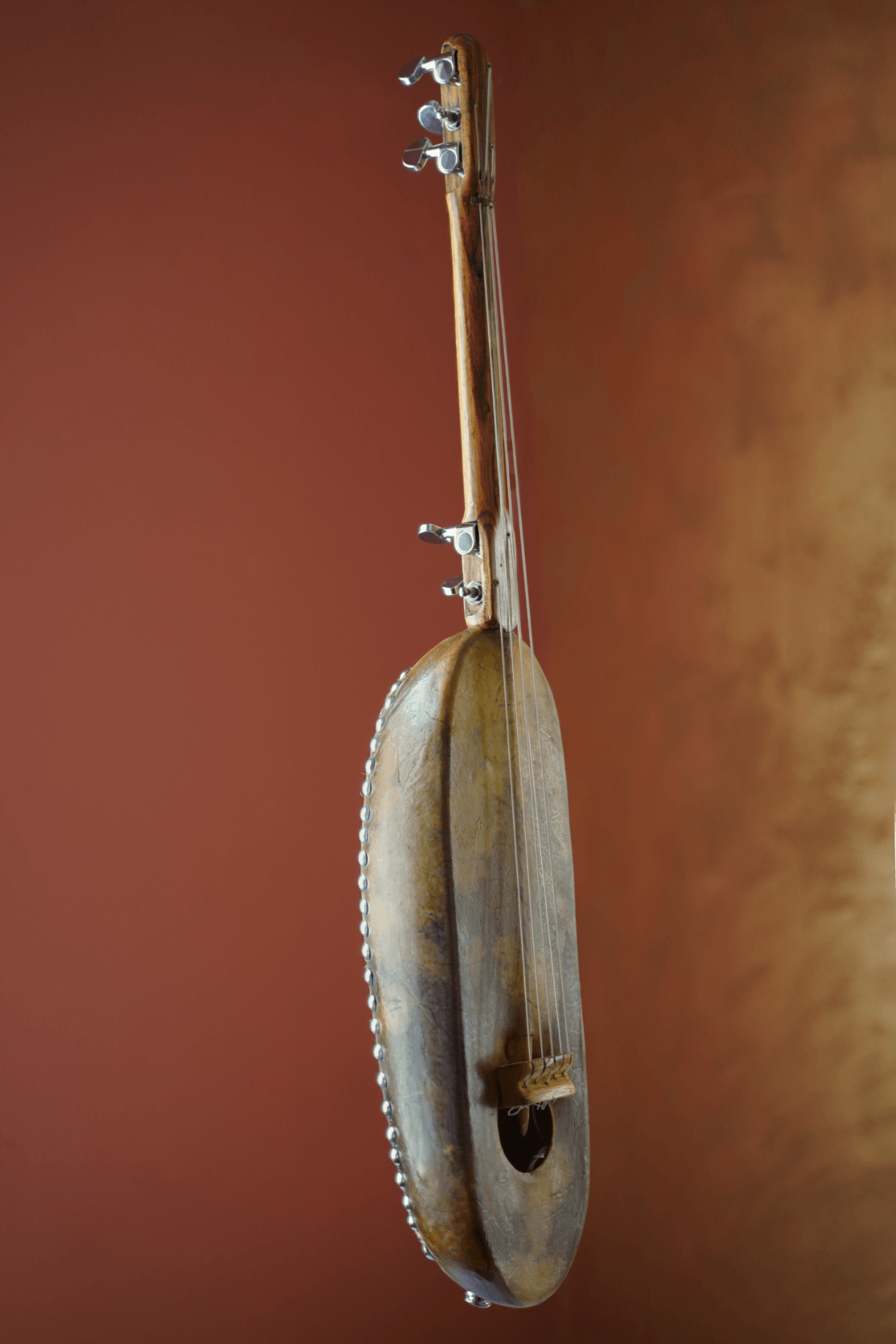
Every xalam has its own voice. No two instruments are exactly the same. The wood, skin, strings, bridge, tension, and hand of the maker all become part of the sound.
This is why the xalam is more than an object. It is a living instrument. It changes with weather, touch, tuning, and time. It invites the player to listen deeply and to develop a personal relationship with sound.
Our xalam is handmade in Dakar by master luthier Abdoulaye Traore Diop. Each instrument is shaped from natural materials, tuned by hand, and built to carry the spirit of this tradition into the hands of a new player.
This model is not made to imitate history from a distance. It is made to continue it through new songs, new hands, new stages, and new stories.